California Load Obligation Trading
Granular capacity assessment is critical for ensuring resource adequacy in California’s power grd, but it is challenging for participants to manage. We build tools that can help CCAs and JPAs efficiently meet their slice-of-day capacity obligations.
Obligation trading
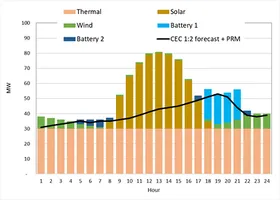
California requires LSEs to procure capacity to cover anticipated load. As of 2025, LSEs must meet hourly thresholds, known as the slice of day (SOD) framework.
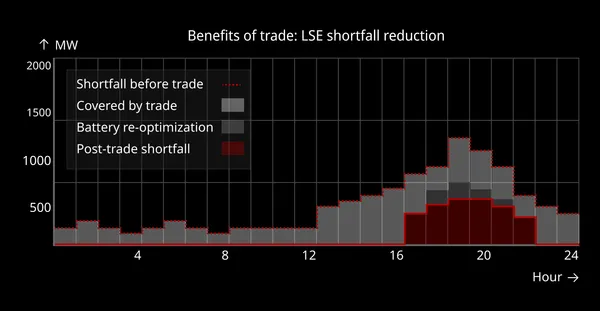
While obligations vary by hour, but capacity is sold at daily granularity. Obligation trading helps utilize capacity efficiently when LSEs are short in different hours.
A CalCCA report estimates trading could save consumers $100M to $200M annually.
A market design perspective
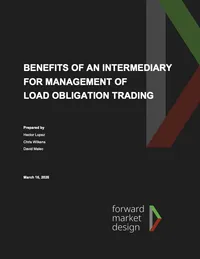
The California Public Utilities Commission and other stakeholders have expressed concern about the overhead of tracking trades and downstream complications for other policies. Read our analysis:
Trade registry
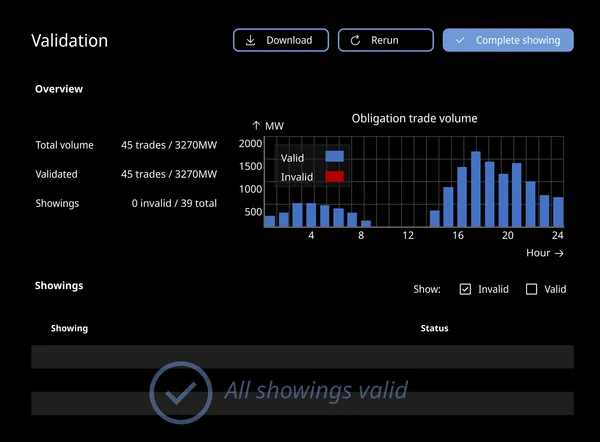
A registry is a valuable tool to maintain compliance when obligations are traded. Today, LSEs submit independent spreadsheets detailing their capacity purchases. Spreadsheets are often inconsistent, causing unnecessary reconciliation costs that must be resolved under tight time constraints. A trade registry enables streamlined, consistent reporting. Issues are discovered before submission.
Trading parties follow a simple protocol to register trades—one LSE submits and the other confirms.

The California Public Utilities Commission uses the registry platform to validate individual LSE reports. Reports are consistent by construction, avoiding costly reconciliation.
 Learn more: LOT Platform Overview
Exchange
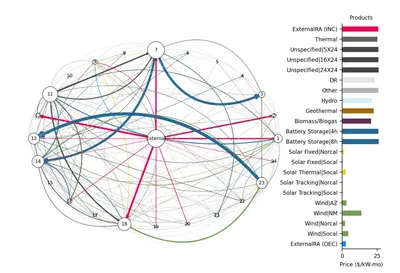
Centralized clearing (with optional participation) is important to realize the biggest gains identified by the CalCCA. Integrating trade and registry services makes it easy for LSEs to trade and realize those gains.

To learn more about how our tools can streamline resource adequacy reporting, reach out to Chris Wilkens at [email protected].